
Despite occasional attempts to offer unprecedented deviation with an image or verse assignment, San Francisco is one of several cases where the conventional pairing proves perfectly justified. While “obvious” puzzle associations should be handled as theoretical starting points versus forgone conclusions when initiating investigations, image 1 and verse 7 offer a host of substantial context clues all indicating the west coast metropolis.
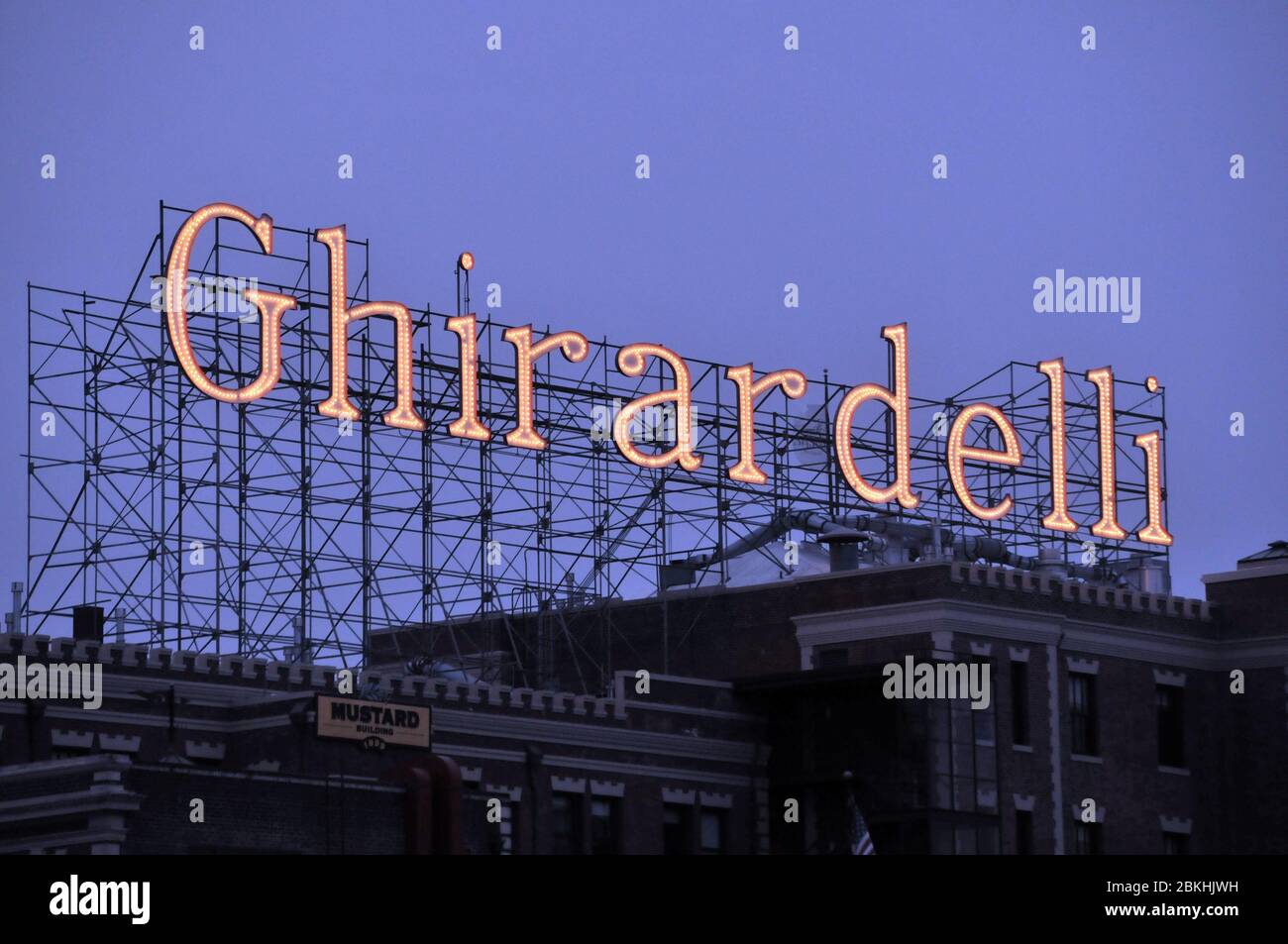
Image 1 offers San Francisco coordinates, a silhouetted representation of San Francisco Bay (credit Wayne Smith), a backwards uppercase letter “g” and lowercase “h” likely alluding to the Ghirardelli Sign, and a depiction of Golden Gate Park with a diverse assortment of confirming details such as crossing arms for Crossover Drive, or the roman numerals mimicking numbered streets intersecting with park boundaries. Verse 7 repeats the word “giant” twice, cleverly insinuating the plural form “giants”, serving as the team identity for the San Francisco baseball club. And of course, we can’t forget “Twain, Twain the famous”, initiating his storied carrier as the larger-than-life satirist in the western oasis of culture and luxury circa 1860.
As a result, we know we’re in San Francisco while GGP is prominently featured in an enigmatic and reconfigured format, draped vertically across the woman’s gown, prompting a pointed investigation. While I am certainly not the first to suggest the involvement of GGP in some fashion, a considerable amount of variation exists. Several clues for this San Francisco solution I am presenting are previously established, while others are less common or entirely unestablished to my knowledge.
At stonewall’s door
Where the air smells sweet
Not far away
High posts are three
Education and Justice
For all to see
Near the Conservatory of Flowers found at the Northeast corner of GGP along JFK Drive, there is a wrought metal gate in a stone wall which emulates the metal gate or window visible near the top of image 1, sharing specific characteristics. Pay particular attention to the long thin black bars, straight horizontal member across the top, the arching header, and the angled arch stones, all details portrayed in image 1.

The air smells “sweet” on account of the flowers. The sweet smell referenced is confirmed by an additional clue found in the Japanese translation of The Secret to relate to atmosphere or mood rather than taste, which accurately corresponds to the proposed interpretation. While there are certainly several locations in the park where you could generically associate a sweet smell to an entry through a stone wall, the three high posts provide an important contextual clue.
There are three decorative, wooded posts topping the three domes of the conservatory. The Japanese translation of The Secret confirms that the posts are wooden. The posts are visible and “not far away” from our “stonewall’s door”. Given that the east and west wings of the Flower Conservancy are not very tall, reaching an exterior height of roughly 20ft, it seems like an odd choice at face value to describe all three posts as “high”. However, the Conservancy is constructed in the Victorian style, named after Queen Victoria, who would subsequently be called “your highness”. The use of the word “high” is thus a play on words, signifying a “high” quality resulting from the architectural association with English royalty, providing a contextual verification far more effective than a generic reference to physical height.

The line “not far away” is peculiar because if taken in perfect order, establishing our proximity to the high posts is entirely superfluous. Additionally, why would the “high posts” lead directly into “education and justice” seemingly without overtly advancing us to a subsequent location, when there is no logical method for applying the next set of clues at our current position? This condition suggests a less orthodox interpretation. Any distance requires two points in physical space. We know that the “high posts” are “not far away”, yet the verse neglects to specify our location at that moment. What if we are “not far away” from the “high posts” while at “education and justice”?
This slight adjustment to order of interpretation based on vagueness of instruction in this San Francisco solution is supported by the Japanese translation clue which advises to pair “not far away” and “education and justice” despite their separation in the verse. Therefore, our next location qualified by “education and justice” is “not far away” from the “high posts”, but not necessarily within an unobstructed view. And since our ambiguously communicated distance is the product of subjective determination relative to a point of comparison, many locations could be deemed “not far away” at face value. So, what is it?
For the longest time “education and justice” bothered me because there didn’t appear to be a definitive, objective connection to make or an undeniable purpose for its inclusion. “Justice” seemed like a clear reference to MLK Drive while “education” could easily refer to one of several facilities around the music concourse (such as the Acadamy of Sciences or the DeYoung Art Museum) which is just north of MLK, or the botanical gardens bordered by MLK. “For all to see” could connect to the concept of justice in the patriotic sense, but nothing I connected felt authentic or objectively confirmed. It also turns out that MLK Dr. was not renamed until 1983, well after The Secret was originally published. So what then…
James Lick was a wealthy philanthropist who left the majority of his estate to social and educational affairs, connecting the terms “education and justice”. He was responsible for funding the Conservatory of Flowers, as well as funding the Francis Scott Key Memorial which are public installations designed for “all to see”. The fact that Lick funded both installations gives additional credence to connect the two together through the verse. While “and justice for all” is a clear reference to the pledge of allegiance which centers around the American flag and National pride, these same themes are also reflected by the Key Memorial which celebrated the writer of the American National Anthem. James Lick’s name does appear on the FSK Memorial to further suggest a legitimate connection. The Key memorial also includes an arched opening, mimicking the overall outline of image 1.

This action takes us to the Music Concourse which was constructed specifically for the Midwinter Exposition of 1894. While our initial verse device in this San Francisco solution offers a seemingly vague and limitless pool of possibilities, visual evidence alluding to GGP and the music concourse compensate for perceived ambiguity with intellectual entry points, offering deductive qualifiers while facilitating a non-linear interpretation process.
Our first inkling to the expo comes courtesy of the woman’s crossed over arms, commonly associated with Crossover Drive, proving as a valid yet incomplete application of this device. The woman’s arms serve to visually separate disproportionate parcels of the dragon themed tapestry, with the outer contours of the dragon’s body and wing forming what appears to be a strawberry immediately below the crossing arms. If applied to Strawberry Hill at GGP, the image deviates from geographic accuracy that would alternatively depict the strawberry above the arms, corresponding to a physical location east of Crossover Drive. While there are several potential methods for explaining this discrepancy, is it possible that a specific condition is being conveyed?

It just so happens that a map for the 1894 Midwinter Exposition at GGP depicts Stow Lake while Strawberry Hill is curiously cut off. Stow Lake even has a similar shape when compared to the “strawberry”. While this observation alone would prove circumstantial, the puzzle offers a consistent collection of references to the near turn of the century celebration of technological advances and cultural flavor.

While the image 1 woman is clad predominantly in black and blue, the infamous “Gum Girls” were flirtatious female chewing gum peddlers found actively patrolling the fairgrounds in blue dresses and black stockings. A dragonesque figure features prominently in image 1, while Dante’s Inferno was a controversial walkthrough attraction primitively simulating a decent into hell upon entering the mouth of a dragon. This by no means offers a perfect one for one match but can absolutely serve as visual inspiration and a topical allusion for the San Francisco solution.

The woman shares a striking resemblance to Sphinx statues left over from the fair and found in front of the DeYoung Art Museum. They share the same basic facial characteristics i.e. sharp cheek bones, un-naturally straight nasal ridge, pointed and slightly angled eyes, and a thick upper lip. Considering the general appearance of each character, the sphinx has a human face with the body of an animal, while the figure in image 1 has a human face and an animal depicted on her body.

Returning to previously visited locations, the Conservatory of Flowers had its front landscaping redesigned for the fair and has maintained the same general appearance ever since. The Francis Scott Key memorial likely would have been installed prior to the fair as it was finished in 1887.
Sounds in the sky
Near ace is high
From the FSK memorial, Sutro Tower is easily seen in the near distance. Based on the JT, it is suggested that these “sounds” referenced in verse 7 are not heard with the naked ear. Since Sutro Tower transmits radio signals, it very easily qualifies. As it happens, Adolph Sutro, 24th mayor of San Francisco, saved multiple attractions from destruction following the Midwinter Expo of 1894.

A few hundred feet away is Rideout Fountain, depicting a perilous and unexpected struggle between snake and sabretooth tiger. The snake assumes attack formation, ominously hovering above its vulnerable adversary, perched with wide open jaw and serpentine physique coiled mercilessly around the feline’s humbled frame.
In the game of craps, two ones on a pair of dice are collectively referred to as “snake eyes”, or in some cases “aces”. In the case of Rideout Fountain, the snake and his eyes are above the tiger, making them “high” in comparison. Although arguably unorthodox, this interpretation perfectly matches verse language.

In addition, a number of complimentary visual devices in this San Francisco solution offer validation. Just above the dragon’s head are two squares with singular, perfectly centered dots emulating “snake eyes” on a pair of dice (credit Wayne Smith).

The dragon itself has a long serpent-like body comparable to a snake, indicative of Chinese dragon depictions, thusly insinuating an immigration connection.
Comparing the dragon depiction in image 1 terminating at the woman’s crossed arms, with the unusual scene atop Rideout Fountain, we notice intriguing correlations. The dragon is trying to bite a roman numeral two while the snake is trying to bite the sabre”two”th tiger. The dragon’s body is obstructed by the woman’s arms just below it’s neck, while the snake’s body is obstructed by the tiger’s arms just below what would constitute its neck. Both dragon and snake are configured with head slanted and body curving inward. While blue beads of various sizes are found around the dragon, beads of water from the fountain are found all around the snake.

Thinking of the word “near”, it can certainly imply contextual similarities as well as physical proximity. On exactly the same site as Rideout Fountain stood Bonet Tower from the 1894 Winter Expo, which is proving to be a integral aspect of this San Francisco solution. Bonet Tower was an A-frame structure, the tallest structure at the fair, as well as the highest grossing attraction, which all applies perfectly to “ace is high” serving as a secondary but equally illuminating interpretation. While Sutro Tower initially seemed like a peculiar choice for “sounds in the sky” being outside of the park and seen at a distance, it can certainly be associated with another tower seen at a great distance from peripheral locations. In most respects, these clues serve as site confirmations and theme building rather than advancing toward the casque.

The nearby Spreckles Music Shell is decorated with casted renderings of two partially clothed female figures holding a small stringed instrument and a long-shafted horn respectively. The hands of the right figure offer approximate matches to the woman’s hands in image 1. The inner domed structure of the shell is lined with a pattern of multi-layered square recesses mirroring the squares found on the woman’s cuffs below her hands in image 1.


Running north, but first across
Intuition immediately inspires assumptions of northbound travel. While proving to be a valid action, this represents a superficial and incomplete understanding of verse instruction. For this San Francisco solution, from the FSK memorial we do indeed progress north, quickly encountering the Junipero Serra monument (removed in 2020) depicting the Franciscan priest holding a large cross. However, if we are meant to encounter “a cross” versus going “across”, we are unable to do so without contradicting the verse’s sequence of instruction which requires “running north” second. Is it possible that “running north” isn’t telling us to go north at all?

Continuing past the large cross, we encounter JFK Drive. Prior to acquiring the Kennedy moniker, this same stretch of road was known as North Drive, which includes the period during the 1894 Midwinter Exposition.

If “running north” is intended to mean traveling down North Drive, then we have no problem following verse instruction without deviation. In addition, this intersection at Music Concourse Drive and JFK served as the “north” entrance gate for the 1894 Midwinter Expo.

We receive additional visual verification for these interpretations from the Cervantes Monument (click here for Google street view), found between Junipero Serra and JFK. The same unique rock design found beneath two armor clad, kneeling figures, matches the mountainous formation in image 1, although reversed, appearing at the upper most elevation just above the barred window. Notice the gradual slope from left to right, and the matching cylindrical formations. Note: It appears as though the rock work may have been reconfigured during a renovation at some point considering the current design does not appear to reflect its previous state.

In jewel’s direction
Typically assumed as a throwaway line indicating the general direction of travel toward the casque location, these three words hold more interpretive power than one would initially suspect in this San Francisco solution. From JFK Drive at the northern Music Concourse entrance, we have precisely two potential directions of travel, simplifying the pool of possibilities. East on JFK we find McClaren Lodge, named for longtime park superintendent John McClaren. Another name for a lodge is an “inn”, while another name for a superintendent is a “director”. Taken this way, “in jewel’s direction” is a play on words to cryptically reference McClaren Lodge. While for many this will likely constitute “jumping the shark”, the image provides three very specific confirmations.
First, image 1 seems to show a leaf pointing toward the Roman numeral 10 which is directly across from the Roman numeral 5 which appears upside down, suggesting something needs to be reversed. If you put those two numbers together and reverse them, they make the number 501, which is the address for McLaren Lodge.

Secondly, immediately above and below those same roman numerals, the scales of the dragon appear in a different pattern from the rest, manifesting in varied sizes of squares and rectangles. This same pattern appears in the blockwork on McLaren Lodge. The significance of this connection for the San Francisco solution lies not just within the matching pattern, but its sole image 1 location flanked by numeric values signifying the McClaren Lodge address.


And thirdly, the rose vine which brings attention to the Roman numerals contains both leaves and a curly cue shape, while a red streetlight in front of the lodge contains these same design features, and to my knowledge is found only here. In fairness, the leaves on the streetlight are a different variety compared to image 1. However, an effort to maintain anonymity could motivate apparent inaccuracy in this case (broad leaves would be a curious choice for a rose vine.) Please notice also the curious parallels between the painting and the streetlight: the curly cue right next to a circular shape comparable to the clock, the placement of the leaves relative to the curly cue design, the red color emulating the rose, what looks like a blossoming flower directly above the circle of the streetlight, and the vague similarities between the support under the table and the post of the light. Many characteristics from the side table seem to have accurately placed real-world counterparts in this San Francisco solution.

The involvement of McLaren Lodge would fit our Winter Expo theme in that John McClaren was the acting Superintendent of GGP during that period and a strong opponent of the GGP’s use for the expo.
If traveling on JFK east bound toward McLaren Lodge, we actually pass our starting location near the Flower Conservatory on an elevated section of road. Looking at the image, two columns of blocks appear on the woman’s cuffs flanking either side of the GGP depiction. The woman’s arms are crossed, and her fingers are pointing between blocks on both sides. As it happens, we “crossover” stonewall’s door and pass between vented partitions with square cutouts on both sides. Image 1 is mirroring and confirming our verse interpreted actions in this San Francisco solution. We also reversed our course, which is interesting given how so many devices in image 1 are reversed or flipped.

Not only do the decorative square cutouts serve as a confirmation of the intended path, but also serve to eliminate other GGP locations with the same gate and tunnel system but missing the aforementioned railing design.
Giant pole
Giant step
To the place
The casque is kept
We are now at the end of GGP and the beginning of Panhandle Park, which when observed from a map view or aerial photo…looks like a giant pole. Panhandle Park is split in the middle by a single cross-cutting street, forming two distinct sections or blocks. Considering that the word “step” offers a diverse collection of potential dictionary applications, we are by no means limited to a literal stair or a physical step. In the simplest and arguably most ambiguous form, a step can simply be a flat, delineated section, especially if found in a series. Applying a map view, Panhandle Park is comprised of two “steps”. Bypassing the first “giant step” takes us to the eastern most section of the park, to the general resting place of the casque.

Applying a superficial face value analysis of image 1, it seems to imply a general Panhandle Park casque location when comparing the map with the pearl’s location depicted beyond GGP.

The image shows the pearl to be found beyond the confines of GGP on the woman’s neck, separated by a horizontal black border containing four shapes and the letters “g” and “h” both represented backwards. Starting with the shapes, let’s apply them to a deconstructed representation of a Masonic Compass symbol. The image shows two geometric squares, while two carpenter squares, one of which is depicted in the aforementioned Masonic symbol, make a whole geometric square. The triangle represents a carpenter’s compass, while the entire symbol is often depicted encased in a circle, such as within a medallion. The dots in the center of each shape correlate to the letter “G” found within a Mason’s compass while a letter “G” also appears right beside one of the squares. The below image is a generic example of a Masonic Compass symbol not specifically tied to San Francisco.

As it happens, the street that separates the two sections of Panhandle Park…is Masonic Ave.
In image 1, each side of the black horizontal border has two shapes, while each pair of shapes is complimented by either the capitol letter “G” or lowercase letter “h”, both shown reversed. If we look on the map at Masonic Ave, investigating two blocks to the north and south respectively as a result of our two sets of two shapes, we find Haight St. and Grove St. When applied to the image, this map interpretation is both hauntingly accurate but also perfectly reversed. On the map, Haight is a proper noun while grove is a common noun, while the case of each letter in image 1 is reversed. On the map, Grove is north while Haight is south, depicted exactly the opposite in the image utilizing the letters “g” and “h”.

Is an object
Of Twain’s attention
The viability of the above puzzle applications depends greatly on our ability to find the object of Twain’s attention. If this “object” serves to mark our casque location, then we must also identify the immigration reference at the casque site.
Within the furthest north-east section of Panhandle Park, we find the William McKinley Memorial. As a proud anti-imperialism activist, Twain expressed opposition to McKinley’s intension of converting the Philippines into a US territory. Reference to the “object” of Twain’s attention holds both figurative and more literal meanings. While McKinley is the “object” of Twain’s attention in the topical, sociopolitical sense, McKinley’s monument is symbolically represented in image 1 as literal objects. The rose emulates folds of the female statue’s tunic, while the depiction of an alarm clock reflects the medallion like representation of McKinley’s face. The side table these items are resting on shares rearranged characteristics with the monument’s base. In particular, the large circular platform corresponds to the tabletop, while turned contours of the table’s base support share similarities with molded elements of the monument’s base support.

As it relates to the previously established Masonic references, both Mark Twain and William McKinley were reportedly Freemasons. Applying image 1, if we take the long arcing line below the pearl, and flip it above the pearl, it shares a resemblance to the Masonic Eye of Providence.
As for the immigration focus, our litany of the jewels clue references “Cathay”, a predominantly European nickname for ancient China. The inclusion of a historical alias implies a historic association. As it happens, Chinese officials claim the Philippines were a part of ancient China as a product of its location in the South China Sea, and occupied the archipelago into the 10th century. According to Positively Filipino, applying US census data, the Filipino population of San Francisco was roughly 3480 in 1940, peaking to over 42,000 in the early 1990s. While Filipino inclusion may be highly unexpected, it violates no qualifying puzzle requirements, alternatively fulfilling all established devices to the letter.
While this next bit is firmly within the realm of superficial and circumstantial associations, notice how the rock wall cutout on the left middle of image 1, previously connected to SF Bay, not only lines up with the side table, but shares a vague resemblance to the William McKinley Memorial.

Through leaked insider intel, we are informed that the letter “f” is a vital detail of the casque location. The letter “F” is assembled with the rose vine and found on our side table of miscellaneous objects, consistent with the overall interpretation assuming it appears at or near our casque location. In case you didn’t already know, Panhandle Park is bordered to the north…by Fell Street.
Typically, this same insider intel and image 1 visual device are associated with the Fairmont Hotel. As a supposed San Francisco casque retrieval was first reported, later confirmed through official channels as a hoax, John Jude Palencar expressed excitedly through private text message that the associated investigator must have determined the “Fairmont clue”. As a result, many enthusiasts assume that the Fairmont Hotel is directly involved in locating the casque as opposed to being misdirection, a peripheral identifier, or both. When considering a potential Fairmont inclusion for GGP and Panhandle, it just so happens that mining magnate James Graham Fair, whom the hotel is named after, died in 1894, which is the same year that the Winter Expo at Golden Gate Park was held.
If all of this were not enough, one additional detail further ties everything together. Opening festivities for San Francisco’s Midwinter Exposition of 1894 were initiated on January 27th with a parade of VIPs, performers, and exhibitionists marching (and in some cases cycling) along the streets of San Francisco before reaching the northeast edge of Panhandle Park, arriving at the precise location we were led to by the painting and the verse in this San Francisco solution.
The final element left to identify is a precise dig location. This is typically where conventional investigative strategies applied to any of the cases devolve even further into untethered guessing. We look for shadows, apply PhD level mathematics, lean on undefined visual matches, or dig a bunch of holes until our arms fall off. In fairness, this is arguably the most problematic aspect of the puzzles in general to decipher, possibly by design. Even with extremely precise units of measurement and directional cues, a 6in box up to three and a half feet deep in the ground offers no leeway for human error committed by either the investigator or the puzzle’s creator. As others have stated, off by an inch…off by a mile…
If McKinley’s monument serves as our dig marker, we need some awfully specific directional cues, and a reliable system of measurement communicated clearly considering the land we find ourselves on is relatively expansive. Returning to the lines “In jewel’s direction, Is an object”, it just so happens that image 1 depicts the clock, which is an “object”, at the six o’clock position, which is also a “direction”. Looking at the table of objects representative of the general casque site, the vine forms a number “8” and a number “3” which make eleven when added. It makes sense to add these numbers together because we add the rose and the clock together to form a representation of the McKinley memorial. The six Roman numerals found above the woman’s crossed arms near the pearl, when combined, generate the sum of eleven. When an ace is “high”, alluded to with line eight of verse 1, its value is eleven. In further support of this concept, each set of Roman numerals found vertically beside the dragon add up to 21. The game of Blackjack applies a high score of 21 where aces offer the highest value at 11.

Along the black vertical boundaries of the dragon’s rectangular enclosure, four Roman numeral fives appear upside down, seemingly serving a dual purpose as the capitol letter “A”(each appears to have a short horizontal line connecting the upright members). In fact, every Roman numeral five represented is upside down, perhaps further eluding to “near ace is high” .
Collectively, this information would seemingly imply eleven steps from McKinley’s face at the six o’clock position, taking us to a precise dig spot. However, as noted in earlier entries, many elements of image 1 are reversed. Is it possible this implies we apply our locator elements to the backside of the monument? After all, what direction do we face to apply the 6 o’clock position: toward the statue or away from it? From a logistical standpoint, the backside offers slightly better cover for digging purposes, but not by much. In opposition to this possibility, the presence of a sizable tree, found well developed in aerial photos from 1987, within close proximity to our theoretical search grid should be acknowledged.
Update 12/31/25: Of the four, arguably five applications of time pieces amongst the images, image 1 is curiously the only instance of natural numbers versus roman numerals, lines, or no indicators at all. Could this, coupled with the presense of roman numerals elsewhere in the image, be communicating something? Looking to the McKinley Memorial, the years of McKinley’s birth and death respectively are represented with 1843 on the left of his face and 1901 on the right. More specifically, we find the number 3 on one side and the number 9 on the other, harkening to the 9 and the 3 appearing on the left and right sides of the clock. Since the respective numeric representations are inverted, perhaps this further alludes to a rear side casque location, reversing an otherwise assumed front side orientation by aligning numerical positioning between image and memorial.
Lastly, the associated Litany of the Jewel clue from page 21 of The Secret reads as follows: “Chaste, perfect as the silver moon.” One definition of “chaste” is simplistic in design. Silver and moon represent lesser forms in their respective categories relative to gold and sun. This means we should expect a casque location simple in design and diminutive in form and function compared to a grandiose counterpart. Hopefully that sounds familiar…
This proposed solution embodies a series of standards and criteria indicative of authentic answers. To familiarize yourself with the investigative framework applied for discerning this answer while subsequently eliminating all others, click here.
San Francisco Solution Pros:
-Cohesive theme centered on the 1894 Winter Expo found throughout interpretation
-Each verse line and every word utilized
-Japanese translation clues authenticated
-Litany clue applied logically and appropriately
-Explanation offered for Litany inclusion of ancient Chinese nickname
-Outside clue pertaining to the letter “f” at or near the casque site explained
-Verse interpretations consistently interconnected with other puzzle elements to substantiate validity
-Image connections to McLaren Lodge are extremely compelling
-Application of clear contextual clues from verse to San Francisco
-“Giant pole” interpretation excludes ordinary poles
-Image seemingly implies casque location barely beyond GGP borders
-Verse interpretations treat puzzle like a puzzle
-A large variety of visual verifications
-Reversed imagery explained and utilized repeatedly
San Francisco Solution Cons:
-Leaf design on McLaren Lodge streetlight does not match painting
-Dragon matches are not obvious or direct
-Obscure Chinese immigration reference employed when far more historically and culturally significant opportunities exist
-Less literal and more figurative verse interpretations
-“Giant pole” is not a literal pole, it just looks like a pole
-Not much to say about rock formations in image 1
-Several visual matches are not exact
Leave a Reply