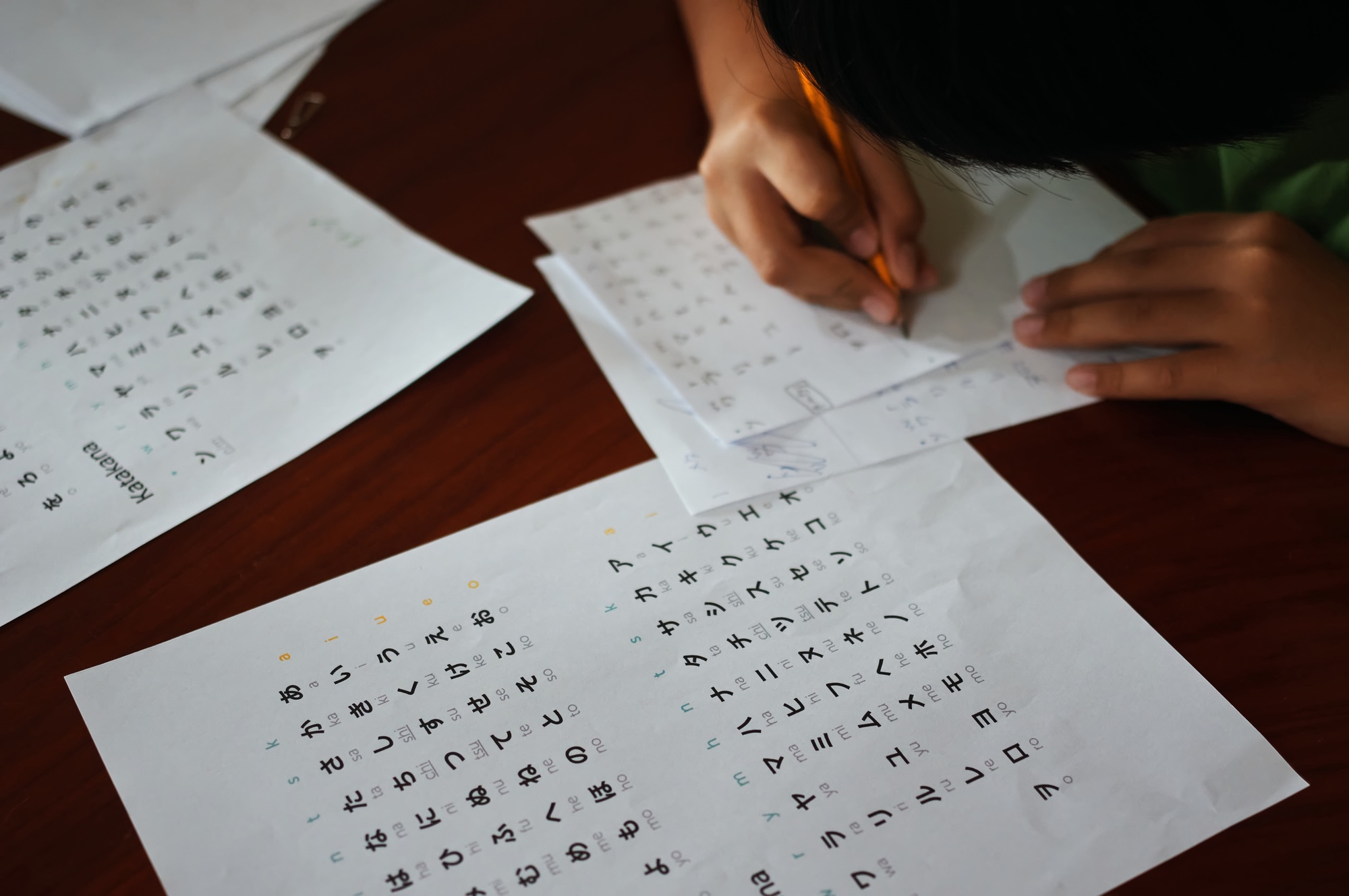
The Japanese translation or what I abbreviate as the “JT”, is an edition of the Secret book released in 1983 for the Japanese audience that incorporates a translation as footnotes, maintaining the more accurate English version as the primary source for investigation. In addition, a section of exclusive contextual clues appears as a result of the interpreters’ clarifying conversations with Byron, aimed at ensuring optimal accuracy when Japanese equivalents of English words fail to present a perfect one for one translation. Properly understanding the Japanese translation of The Secret has become an important aspect of the investigation.
These additional clues have become a springboard for vetting proposed solutions, and in some cases comprise the very basis of a theory, in direct opposition to warnings from the interpreters themselves. We are told that these additional context clues do not easily lead to answers and may in fact “taint your imagination and make the endeavor even harder”.
The prevailing logic dictates that if JT clues associated with confirmed cases have been proven correct and completely accurate, then subsequently every other JT clue is equally trustworthy, including common perceptions generated from less binary, more ambiguous statements. This is why objectively understanding the Japanese translation of The Secret is so important.
It is certainly fair to identify that many of these clues are straight forward and instantly impactful. We are told that certain verse entries are quotations from outside sources. Some words are confirmed to be proper nouns, such as “octave” in verse 11 (despite the omission of capitalization), or “congress” in verse 12. The “high posts are three” from verse 7 are qualified as wood. As a result of the Chicago and Cleveland cases, we have nine clues that have been officially confirmed as accurate.


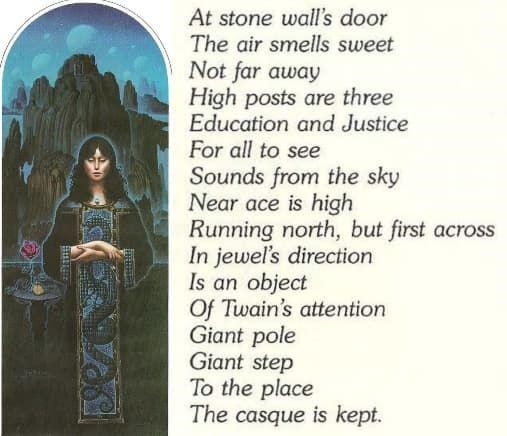
While many of the clues have been vetted as accurate or at the very least represent a face value claim deemed reliable via association, some of these extracurricular explanations are more vague than others. Although Byron is the original source of these clues, his statements were documented second-hand by the JT authors in Japanese which was then interpreted by a third party. This dynamic represents a potential breeding ground for inaccuracy, misreporting, misunderstanding, and the inadvertent misrepresentation of personal commentary regarding Byron’s direct input. There are even alternative translations of these clues that greatly affect resulting applications. While these additional hints may be batting 1.000 amongst two confirmed cases, an air of collective uncertainty remains.
The point is, not every clue is presented in the same way. In some cases clarifying statements are attributed as information directly from Byron. In other cases, the JT author admits to speculation. For example, in regard to the “proud, tall fifth”, the JT author believes this could be a tree, while they provide no clarification for what this belief is based upon, admitting that Byron refused to reveal what the “proud tall fifth” actually was.
Lost in Translation?

There are any number of reasons why unconditional trust should not be allocated to this extra information from the JT, and why understanding the Japanese translation of The Secret is instrumental to viable investigations. Recognizing that multiple iterations exist with significantly altered language further compromises theoretical confidence. I have found two different versions of these JT clues…and they both ironically come from the same source. The Secret enthusiast website 12treasures.com host a document by “Kenta and Phil” (which is the version I have been using) while the interpretations of JT clues posted to individual case pages offer stark and confusing variations. For example, take the same verse 10 clue we just discussed.
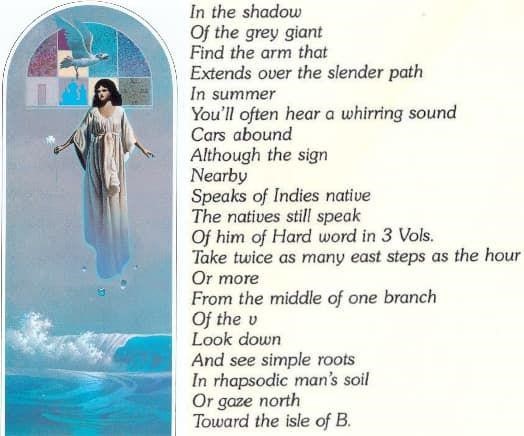
From 12treasures.com New York page
“A normal person would think that it was referring to some kind of writer, but it’s difficult to find out who that is.”
From Phil and Kenta’s version:
“Line 12: Of him of Hard words in 3 Vols.
From this line we can tell the subject is an author. Who could it be?”
The impression created by each statement is contradictory. In one case, the JT author appears to be guessing based on original verse language, while in the other instance they assert that “him” IS an author. In at least one case, the truth is being inadvertently misrepresented. Can someone be responsible for documentation of some variety and not be a literary figure? For the record, the original verse application of “word” is singular despite being mispresented as plural in this instance.
However, this does not mean we should completely disregard the JT clues, but rather take a cautious, objective case by case approach that honestly and transparently represents the information in front of us, versus manipulating it to serve personal satisfaction.
Regardless of which translation is applied, this next account of Byron’s input includes explicit inaccuracy, compromising our confidence in unvetted entries.
From 12 Treasures San Francisco page:
“It’s very difficult to understand what education and justice is referring to however after education and justice can be seen not far, the editor said If you think of the can be seen not far and you add something on to it and think hard about it then it becomes easier to understand. Education and justice can be seen from a place not too far away from here. In regards to that sentence, what place is this…….?
From the Kenta and Phil document:
“Line 5: Education and Justice. With only this it’s hard to understand, I was told you should think of the phrase together with “..can be seen not far…”. “(Education and Justice can be seen from not too far)” means….?”
In both of these cases, the verse has been misquoted as saying “can be seen not far” instead of “Not far away”, which is an incredibly important distinction. In one case, we see something “not far away” while in the other case it simply exists not far away. This entry potentially creates a false impression that “education and justice” must be seen from a particular vantage point, i.e. the “high posts”. In either case there is a direct association drawn between “education and justice” and “not far away”, which is interesting considering that these lines are separated by “high posts are three”.
So, what is the intended purpose of this communication? Well, the JT authors also tell us to pay attention to sentence structure such as preposition usage that can alter the order lines are read in. The verse tells us we are “not far away” from “high posts are three”…but it never tells us where we are standing. Could we be at “education and justice”, not far away from the three high posts, but not necessarily see them simultaneously? This would certainly explain what the JT is attempting to communicate, consistent with commentary that highlights the importance of nuanced language greatly altering the final result. Hopefully, these examples clearly illustrate why understanding the Japanese translation of The Secret accurately is so important.
Give Me Liberty

Beyond the inherent pitfalls of these clues, investigators will often take extreme liberties when interpreting the intent of a message to accommodate a preferred “solution”, much like puzzle content is manipulated beyond recognition.
While several of the JT clues have been officially confirmed, I wonder how investigators would utilize those same clues if unconfirmed. In particular, I look at line 11 from verse 4 in Kenta and Phil’s translation:
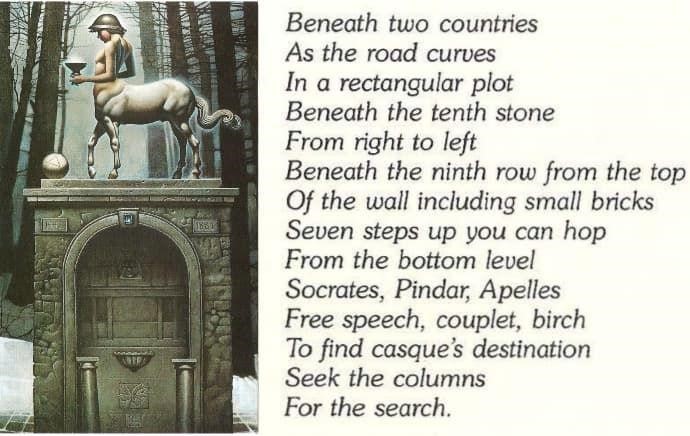
“Couplet, or two lines that rhyme. Think about Shakespeare.”
The confirmed interpretation is the name of a Greek poet engraved in stone at the Greek Cultural Gardens in Cleveland. If this clue were left unconfirmed, would we merely find two rhyming lines somewhere? Would we assume there is an explicit Shakespeare connection? Would we apply an unconfirmable reference to an otherwise unrelated poet? In any of these instances, can it be claimed we are just “following the clue”? This should hopefully illustrate how these clues can so easily be allocated incorrectly.
Applying the same spirit of analysis to unconfirmed clues arguably just as open to interpretation, we achieve interesting results. For example, when the clue for verse 8 tells us to “imagine a leaf”, does this have to be a literal leaf or just a reference to literal nature like grass, just like “think about Shakespeare” was just a reference to poetry?
How we often treat the JT clues further illuminates an unfortunate and counterproductive brand of behavior needlessly stifling investigations. Information assimilation is HIGHLY selective. We allocate exclusive focus to elements that support our position and ignore everything else. Often times, the emotional connection to preferential interpretations inhibits authentic understanding of the Japanese translation of The Secret.
In contrast to conventional investigative frameworks which often carelessly disregard sentence structure and language nuances, JT commentary encourages an analysis of sentence composition and organization. The JT tells us to cautiously apply clues that do not easily lead to answers, then we build solutions where the JT clue is the entire basis of our proposal. We use accurate and confirmed clues to prove that the subjective interpretations of other JT clues are valid. We apply information indirectly from Byron as gospel, then characterize the same person as a clueless buffoon regarding his ability to competently communicate above a 3rd grade level as it relates to his own puzzles. This all seems extremely inconsistent.
Where the Streets Have No Name

While these clues can and should prove useful, they are misappropriated on a regular basis. Some instances are more blatant, while others are more inadvertent. The manner in which a large segment of investigators apply the word “Lane” within the context of the associated JT clue is one of the most egregious offenses, illustrating a lack of understanding for the Japanese translation of The Secret.
“Line 1: Lane. If translated to a noun, it would be “small street” or “narrow path”, but I was told this “Lane” is a proper noun. A proper noun means it is a name, so what could it be? A mountain, river, city, or…?”
It is frequently contested that this assignment of proper noun status can serve as a “representation” rather than a ridged application. Instead of concluding from clear and direct language that “Lane” would therefore serve as a name i.e. Mt. Lane, Lane Park, Lane River etc., it is alternatively asserted to mean any street anywhere because all streets are “proper nouns”.
Let’s break down this problematic and incomprehensible claim. Firstly, the Japanese clues are intended to clarify context, as a result of Japanese words that are often more expressive or contextual in nature compared to their multi-functioning English counterparts. If Lane is a specific name for something as the clue states, this information reduces possible interpretations to an extremely limited number of devices thus simplifying our search.
If this alternatively means that “Lane” can mean any street anywhere, what additional context are we being provided that we didn’t already have? If Lane is intended to be associated with any street anywhere, then this clue is hopelessly ambiguous and offers no clarification, making it a terrible way to start verse 5. Why would we be given an additional clue for a device that is nearly impossible to interpret? The next question is, for those who speak fluent Japanese, and have access to the JT, can we confirm the Japanese word choice and how it translates? That alone would put this needless debate to rest.
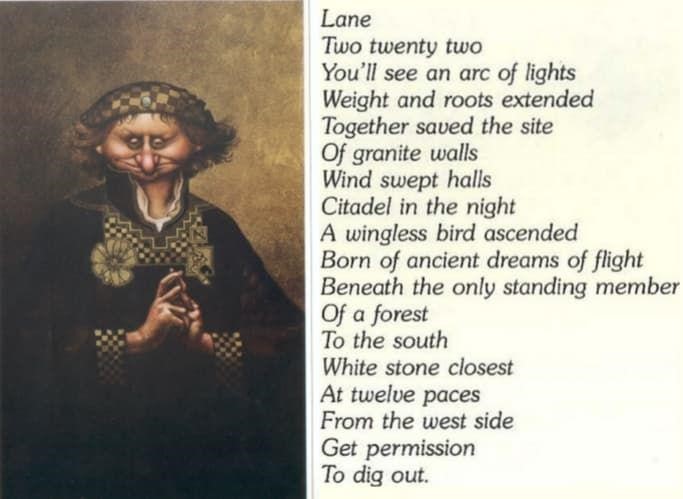
Secondly, if the above passage from the JT can be trusted for accuracy, it means that Lane is a name first and anything else second. The second we say “Lane is a street”, we are applying it as a common noun, not a proper noun. “Lane” could be a street, but it must contain the word “Lane”. This directly correlates to the language used in the above passage. Why ask if “Lane” as a proper noun could be a mountain, river, city, or something else, if it is merely a “representation” of any street anywhere? That just doesn’t make objective sense.
Thirdly, there are two other instances in the JT in which clues are qualified as proper nouns, and there is zero debate about those. In regard to verse 11, the word “octave” is said to be a proper noun, convincingly associated with Octave Chanute. In regard to verse 12, the word “congress” is said to be a proper noun and is confirmed officially as Congress Parkway. So, why is there no debate in these instances, but the same language in a different case is inexplicably confounded as a cryptic representation rather than a face value statement?
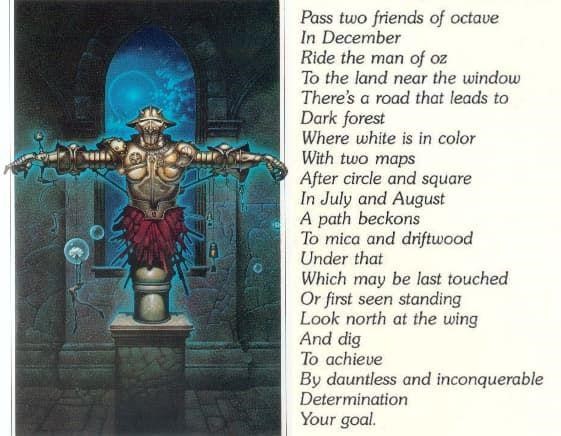
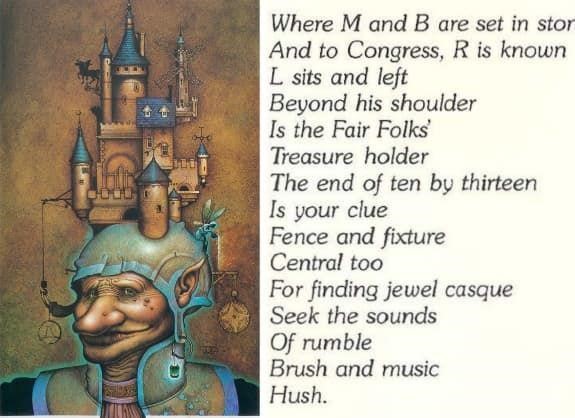
Fourthly, generally speaking, if someone wants to tell you that “Lane” is a name, how do they say it any more clearly than this? Are millions of school children everywhere confused about what a proper noun is? If I say “Guy” is a proper noun, do you interpret that to mean Adam, because that’s the proper noun name of a guy, or do you interpret that to mean Guy IS the name? The only reason people interpret “Lane” as any street anywhere, despite clear and concise communication to the contrary, is to unconditionally justify personal ideas. This is why we have thousands of conflicting ideas and no resolution. People just are not being honest. Lane is a name.
Marching to the Beat of a Different Drum

What this interpretation of “Lane” has accomplished is the justification of dozens of otherwise impossible solution proposals. In comparison, the application of the JT clue involving “as you walk the beating of the world” from verse 8 gets a little more complicated. This is where understanding the Japanese translation of The Secret proves vital.
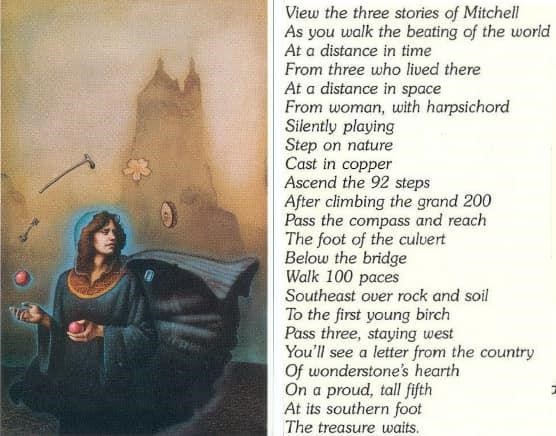
“The beating of the world. This is a difficult section (…even though every part is difficult). From beating, think “beat”, and from “beat”, think “drum”. (Japanese “drum”) is spelled “d.r.u.m.” From this you must think of a person’s name. Open up a relatively large English dictionary and find “drum”, and search the vicinity to arrive at a person’s name. Without tedious effort there will be no treasures acquired.”
The interpretation of this clue has directly led to the misappropriated preoccupation with assigning verse eight to Montreal instead of Milwaukee amongst a growing yet proportionally minor contingent of enthusiasts. Depending on how it is read, this clue does offer striking congruency with a street name along the proposed path, inspiring a devoted following.
The above clue is interpreted to support a one for one substitution, replacing the word “beating” with the word “drumming”. It is then theorized that the word “drum” refers to Rue Drummond (which translates roughly to “drumming of the world”) in Montreal. Ironically, this same street includes an obscure building of three stories, historically inscribed with the name “Mitchel”, and is also home to a “legeater dog” as depicted in image 9, found cast into a lamppost base in front of nearby Mt. Stephen’s hotel. These are all interesting and honestly very compelling observations of relatively straight forward interpretations. Unfortunately, this is the exact point where many abandon a thorough analysis, neglecting a comprehensive picture.
For starters, a one for one word swap between “beating” and “drumming” assumes that the Japanese translation is more accurate and revealing than the English version, which defies what we’ve been told from the translators themselves. Notice that we are not once explicitly advised to swap these words. Instead, we are told to “think” drum. Harkening to a confirmed clue, we were also told to “think about Shakespeare” in the case of verse 4, although this proved to be a generic allusion to poetry rather than an implicit direction to associate Shakespeare. In the same spirit, could this clue allude to a rhythmic sound rather than a more direct association?
What should be immediately obvious is that the interpreters comment on how difficult this section is to translate into Japanese. If this is truly the case, then what is so difficult with a literal, one for one substitution of the words “beating” and “drumming”? Why is such a convoluted entry necessary to explain the product of switching a word? And what is the purpose of changing the verb tense? Is it unreasonable to arrive at the word “Drummond” from the word “drumming”? Is this meant to suggest we are associating the word “drum” and not the word “drumming”? Could this even imply the word “drum” as a noun rather than a verb? What if the word “drum” relates to this clue in an entirely unexpected way?
We are next instructed to look for a related word in a relatively large dictionary which is found in the “vicinity” of the word drum. Of course, “vicinity” is an open-ended term. In this context, our mystery word is not required to be on the same page and certainly does not have to contain the word “drum” at all.
We are told that the mystery dictionary entry is the name of a person, in some way shape or form related to “drum”. We are told that our search requires a “tedious” effort. If that’s the case, what is so “tedious” about finding the word “Drummond” near the word drum, only a handful of entries away? What about all of the other “names” in a close “vicinity”, such as druid, drummer, drunkard, drug addict, driver, Dryden, or Dubuque? Could there be some brand of association with any of those names?
If the word “drum” should be interpreted literally, then why did Byron not just use it in the first place, and why do the interpreters include such a long-winded and convoluted explanation of something so straight forward?
Conclusion
In conclusion, while these additional clues are ultimately useful, they are neither infallible nor foolproof. Like the Japanese translators suggest, we should exercise extreme caution when applying these clues to proposed solutions. Under no circumstance should this additional information replace or overshadow direct communication from Byron himself as it relates to the Secret puzzles. We already have everything we need…
Leave a Reply